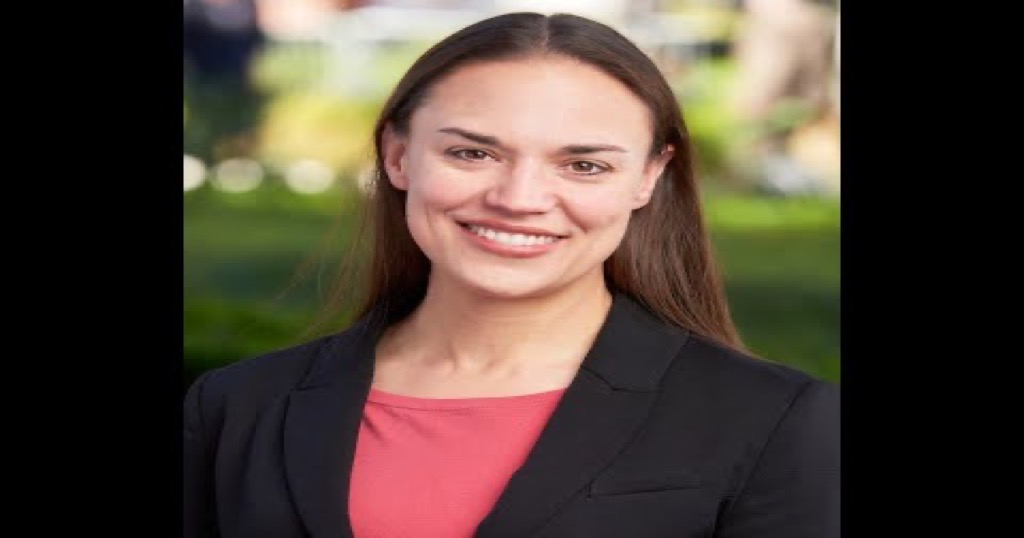
Rachel Barkow: Law Professor, Lawyer, U.S. Supreme Court Law Clerk
By Jeff Grant
We were honored to host Rachel Barkow, the Vice Dean and Charles Seligson Professor of Law at NYU School of Law, as our February 2025 White Collar Support Group Tuesday Night Speaker Series presenter. She joined us two weeks into a new administration, one month after the strangest stretch of clemency activity most of us can remember, and walked us through sentencing, pardons, compassionate release, and what is happening inside the Justice Department. You can watch the full recording above.
Give this one an hour if you have a petition sitting somewhere and nobody will tell you where. Barkow has been inside the rooms where this gets decided, and she spends the night describing the building your paperwork moves through, floor by floor. If you are facing sentencing, hoping one day to clear a record, or the spouse doing the reading at midnight, that map is worth more than anybody’s prediction.
What Rachel Barkow covered
- 6:55 The zero-point reform the Sentencing Commission finally passed
- 7:47 Two open seats and a commission about to flip
- 11:18 Why a pardon is the only way to clear a federal record
- 13:36 Asking the prosecutor who charged you whether you deserve a break
- 14:03 Six layers of review before the president ever sees it
- 15:30 The paper folder that moved from office to office
- 17:08 Inside the Kushner clemency meeting at the White House
- 24:17 What Biden did, and did not do, in his final weeks
- 31:36 Compassionate release after the First Step Act
- 33:37 What the Justice Department purge means for white collar cases
“if you're just a regular person who wants to just file a petition and get it looked at and have it fairly evaluated by a person, you know, we have now had eight years where that has not, that will not happen for you.”
How a federal pardon petition actually gets reviewed
Start with the thing many people learn late. There is no federal expungement. If you were prosecuted in federal court, the only mechanism that clears the record is a presidential pardon, and your petition does not go anywhere near the president for a very long time.
Barkow counts the layers of review in between, and one of them stops the room every time she says it out loud. The pardon attorney’s office goes back to the prosecutor’s office that brought your case and asks what it thinks. Her point is not that prosecutors are villains. It is that the process asks a human being to look at a case they built and won, and then say on reflection that maybe this person has earned a break.
Most prosecutors as as human beings aren’t very good at that. So most of the time they say no.
There are more floors in that building than most people would guess, and until a couple of years ago the whole thing moved as a paper file, an actual folder carried office to office.
Who got clemency in January 2025, and who did not
Barkow has pushed for clemency reform under three presidents and gotten roughly the same answer from all of them, which is why her account of this past January lands differently than the news coverage did. She was at the Jared Kushner clemency meeting in the first Trump term, next to Ivanka Trump, with Kim Kardashian at the same table. Last fall she and Professor Mark Osler, who has described this same machinery to our group from his side of it, published a New York Times op-ed listing what President Biden could still realistically do with the weeks he had left. Some of it happened. The item they put first, granting the petitions the Justice Department had already vetted and sent over, did not, and the only reason any of us know that is a pardon attorney email that leaked to the Wall Street Journal. She still cannot tell you why.
Then day one of the new term brought a blanket pardon for the January 6 participants.
No vetting. No vetting. No individualized review.
Nobody sorted trespassing from assaulting an officer, and nobody checked for unrelated criminal exposure, which is why those names keep surfacing in new charging documents. Ross Ulbricht was pardoned in the same stretch. If that month left you angry about who gets mercy and who waits, Jeff worked through the same knot in The Ethical Dilemma of Pardons.
Compassionate release, and who decides your case next
Her answer to the obvious follow-up is compassionate release, and she gives President Trump credit for it. The First Step Act took the warden out of the middle. Before that, a sick person, or someone who became their child’s last surviving relative after the caregiver on the outside died, had to ask the Bureau of Prisons, and the Inspector General reports on how that went make grim reading. You file with a judge now, and courts began treating an egregiously long sentence, one nobody would hand down today, as its own ground for relief. The Justice Department hated that and still does, and she is honest that outcomes swing hard by judge and district.
The other thing to watch is the U.S. Sentencing Commission, which has done real work lately and is about to change hands. Two nominations went back to the Senate without action, so the new president fills both seats and the balance flips. Ask Adam Bentley Clausen, who served on its advisory group and spoke to us about it, what that room actually decides. Barkow’s forecast for the agenda is short, and worth hearing before you plan around it.
She saves the Justice Department itself for last, the piece with the shortest fuse if your case is live right now. Experienced supervisors are being pushed out or reassigned to immigration work, junior hires were cut, and she is blunt about what is being valued in their place instead of experience. The people who will weigh your case are changing.
About Rachel Barkow
Rachel Barkow is the Vice Dean and Charles Seligson Professor of Law at NYU School of Law and Faculty Director of the Zimroth Center on the Administration of Criminal Law. She served on the United States Sentencing Commission from 2013 to 2019. She attended Harvard Law School, where she won the Sears Prize, and clerked for Justice Antonin Scalia on the U.S. Supreme Court. She wrote Prisoners of Politics: Breaking the Cycle of Mass Incarceration, and her newer book, Justice Abandoned, argues that anyone waiting on the Supreme Court to fix this should read its record first.