Louis L. Reed: Criminal Justice Reform Advocate
By Jeff Grant
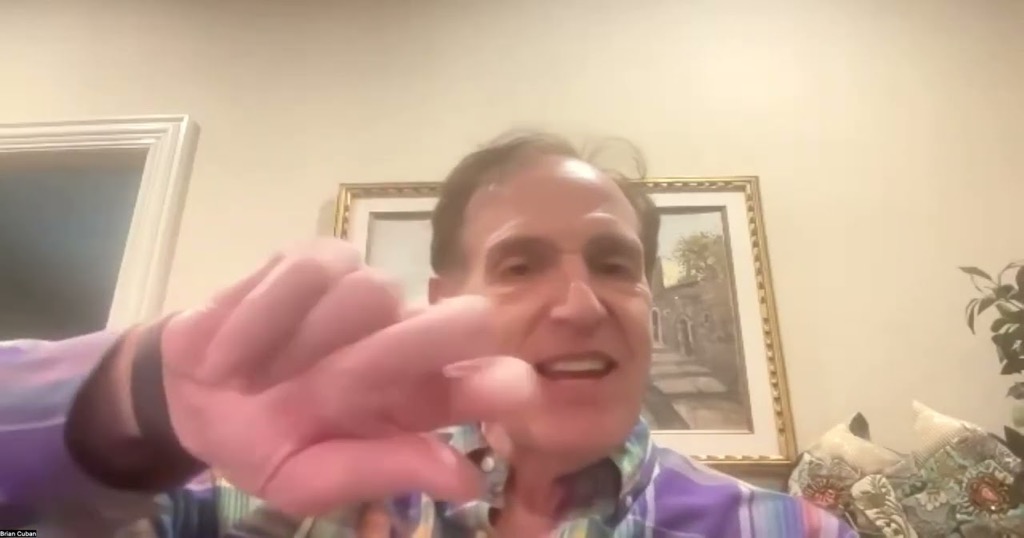
We were honored to host Louis L. Reed, a nationally recognized leader in social impact who served nearly fourteen years in federal prison and then helped move more than thirty state and federal bills, as our April 2025 White Collar Support Group Tuesday Night Speaker Series presenter. Louis joined us from a conference in Colorado, and he spent his half hour on one argument, that the people this system processed are the people best equipped to rebuild it. You can watch the full recording above.
If you have come home and found the door to your own profession locked from the inside, this is the half hour to give him. Louis is not handing out encouragement. He is making a case that the expertise you paid for the hard way is the scarcest thing in criminal justice reform, and that the only open question is whether this community organizes it.
What Louis L. Reed covered
- 0:00 Jeff Grant introduces Louis L. Reed and the evening's format
- 9:45 The Glenn E. Martin line that redirected Reed's life
- 19:45 Million dollar prisons or million dollar investments in healing
- 20:10 Why corrections is the one agency taxpayers reward for failure
- 22:02 Reed rejects the second chance label for something bigger
- 23:05 Reform versus reinvention, and what the difference demands
- 25:26 Van Jones, Prince, and the case for working in back rooms
- 31:40 How the First Step Act got passed, and who it was passed for
“You're not a second chance. I don't need no second chance. I'm a second wave.”
What a conviction costs after you come home, and who stays
He opens with the words he will not use. Not felon. Not returning citizen either, and he wants to know how long a man has to be home before that label expires. What he offers instead is deliberately ordinary. People who are fathers, people who are attorneys, people at the peak of their professional careers. People who are people. Under that he sets the American Bar Association’s count of more than 46,000 collateral consequences of a white collar conviction, carried now by roughly 70 million Americans.
The sentence that redirected him came off a DVD a warden screened inside. Glenn E. Martin, then a vice president at the Fortune Society, said that those closest to the problem are closest to the solution, but often furthest from power and resources. Louis came home and went at that gap. He convinced Bridgeport, Connecticut that it needed a municipal office of reentry affairs and that he was the man to run it, and other cities copied it. Then he was re-arrested over child support arrears that had accrued while he was locked up. Clinical depression. Suicidal ideation. Most of the people who ran for the exit had been through the system themselves. Two or three walked in instead. Glenn Martin was one of them, and so was I.
Some storms don’t scare people who have already survived the flood.
He says that about the political weather. It lands differently once you know what he means by the flood.
Why prison budgets grow every time someone comes back
Halfway through he stops presenting and asks the room a question. Design justice from scratch, and would it involve million dollar prisons or million dollar investments in healing? Then he argues it in the register most of our members read fluently. Corrections budgets are forecast off intake volume. One person booked this week, back next month, bringing someone with him, becomes a line item in next year’s ask for taxpayer money.
Our Department of Corrections is the only government institution that we as taxpayers reward for failure.
Put that model on the New York Stock Exchange, he says, and it would be run out of town. What he wants done about it is not better programming. It is a political action committee that raises money inside this community and puts one of us on a ballot, instead of another decade lobbying people who have never been inside. “So rather than us relying on somebody from the outside in, we’re going to raise somebody from the inside and elect them out.”
What it took to pass the First Step Act
I asked him how the First Step Act actually moved, including the long stretch when plenty of people called it the wrong bill with the wrong signature on it. His answer starts with the best sentence in the hour: “people who are in the prison house don’t care who’s in the White House, so long as they can get back to their mama’s house.” He has never met a person who turned down a commutation over which party signed it.
So the coalition picked constituents, and none of them sat in Congress. Families driving more than 500 miles because a loved one was placed a plane, a train and an automobile away from home. Women shackled during birth and postpartum recovery. People sentenced under the crack cocaine provision. There was an inside game, an outside game, a wild card nobody saw coming, and plenty of people calling Louis a sellout while it ran. Set the results against the lie we love to tell about recidivism.
Implementation is where he is still angry. The Federal Bureau of Prisons owns the earned time credit math, the bill passed in 2018, and members were sitting in front of him in 2025 with sentence calculations that still will not reconcile. If yours is one of them, start with how First Step Act earned time credits work.
About Louis L. Reed
Louis L. Reed is Executive Vice President of the Douglass Project for Justice, where he leads work to reduce recidivism and support successful reentry. After nearly fourteen years in federal prison he helped pass more than thirty state and federal bills, including the First Step Act of 2018. He previously served as Senior Director of Strategic Partnerships for Jay-Z’s REFORM Alliance and as Director of Membership and Organizing at Dream Corps Justice. He hosts the Illmatic Podcast and wrote Deuce’s First Step, a children’s book for families affected by incarceration. This presentation was held on Zoom on Tuesday, April 8, 2025.
Elsewhere on this story
- Louis L. Reed on Nightmare Success Nightmare Success episode: Louis L Reed, 14 Years to Justice Reform Rock Star