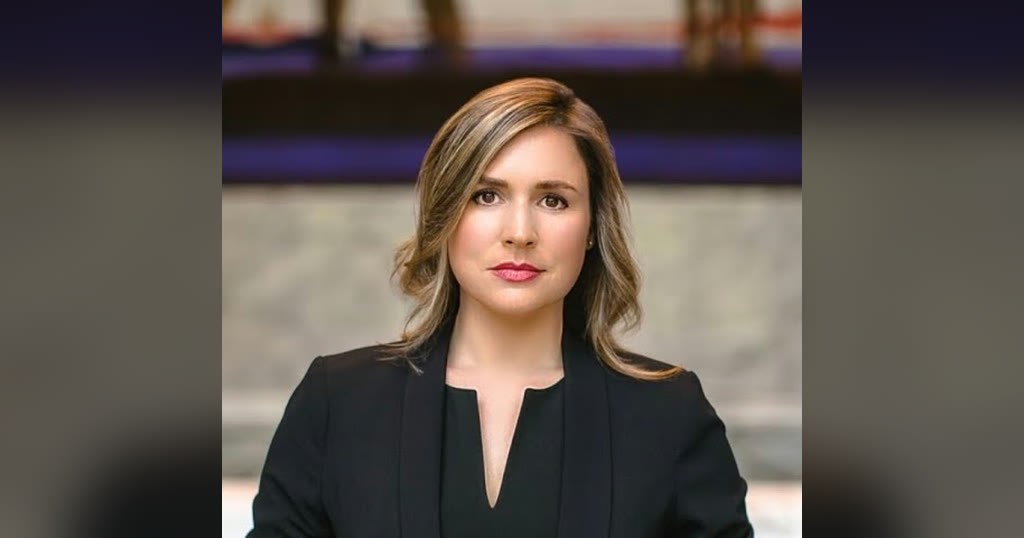
Amy K. Nelson: Founder, Lawyer, Mother, and Criminal Justice Reform Advocate
By Jeff Grant
We were honored to welcome Amy K. Nelson, a startup founder, lawyer, mother of four, and criminal justice reform advocate, as our November 2024 White Collar Support Group Tuesday Night Speaker Series presenter. Amy walked our group through four years inside a federal investigation that seized every dollar her family had and never produced a single charge. You can watch the full recording above.
Jeff opened that night with the documentary about fellow traveler Carlos Watson, calling it a segue into prosecutorial misconduct. It was. Most of what we prepare each other for starts with an indictment. Amy’s hour is about the part before that, which nobody hands you a playbook for. If agents have knocked and nothing has been filed, or you are the spouse trying to get through tonight, sit with this one. Amy is a lawyer. She knew everything her husband had done, and she thought it was fine.
What Amy K. Nelson covered
- 6:04 6:45 AM, a knock at the door, and two letters from the FBI
- 9:45 What her husband was actually accused of doing at Amazon
- 12:45 Every account seized, including the law firm's trust account
- 16:45 Amazon sues for racketeering, and civil discovery opens the case
- 19:45 Why a felony conviction was worth hundreds of millions to Amazon
- 21:11 The email an EDVA prosecutor sent to Amazon's lawyer
- 24:44 The employment contract Amazon withheld from the DOJ for six months
- 25:25 Two men plead guilty to private sector honest services fraud
- 26:40 A 40-page order: no fraud, no racketeering, no unjust enrichment
- 27:52 Prosecutors vacate the pleas and the investigation quietly ends
“And it makes a decision and it goes after you. And it's like a train that can't stop.”
What to say when federal agents show up at your door
April 2, 2020, two weeks into the pandemic, 6:45 in the morning. Amy came to the glass front door of their Seattle house with a baby on her hip. The two people on the step flashed FBI badges and asked for her husband, who came down in his pajamas.
I looked at my husband square in the eye and I said, you cannot speak to these agents without a lawyer because even if you think you’ve done nothing wrong, you should never talk to these people.
That instinct, the one Alex Little spends his own hour with us teaching people to have in their first 72 hours, is about the only thing Amy got to control that morning. The agents left two letters. One said her husband was the target of a federal criminal investigation in the Eastern District of Virginia. The other said the government intended to seize his assets. Amy had litigated for a decade and had never heard of civil forfeiture. Her husband’s first reaction is the one all of us recognize, that there had to be a misunderstanding. There was no misunderstanding, and no conversation on offer. When his lawyer called the company, the answer was that nobody would speak to him unless he intended to plead guilty.
Why civil forfeiture takes the money before anyone is charged
In May 2020 his lawyers gave a presentation to the Justice Department, a decision Amy says she wishes they had never made. The prosecutors left that meeting and got warrants for every bank account. They took his. They took the company’s. They took hers, on the strength of one wire that had come to her once. They took her father’s. Amy learned about it mid-Zoom, when her phone told her an account she knew had money in it was overdrawn.
Then comes the detail that stops the room. Prosecutors also reached into the law firm’s client trust account and took back the fees her husband had already paid his lawyers, something the partners on his case had never seen the Justice Department do. Four little girls, no money, no charge filed, and no judge yet made to prove anything. This is the machinery the former prosecutors on our Women’s White Collar Defense Association panel take apart, and Amy is very clear about what the sequence accomplishes. It is not evidence.
How Amazon’s racketeering suit exposed its emails with the DOJ
With the money gone, Amazon sued her husband for racketeering. Amy thought it was the most devastating thing that could have happened. It was the opening, because a civil case comes with discovery, and discovery handed them the one thing a criminal target never gets, which is the file. In February 2022 they obtained the communications between Amazon’s lawyers and the Justice Department.
Two things in that file are the reason to watch. One is a contract, and what a felony conviction would have been worth to the company that reported him. The other is an email, sent to Amazon’s lawyer after the first meeting by a prosecutor who is now the United States Attorney for that district.
Please don’t worry, we have hand-selected our two very best prosecutors for Amazon’s important matter.
Amy had been deeply involved in politics her whole life, and she is careful to say her conclusion is not partisan. It is structural. Nine prosecutors worked this investigation across four years, and Karen Kelly, who ran the DOJ Tax Division, walked our group through how that review chain is supposed to run, which is what makes that email so hard to read. Two men eventually pled guilty to helping her husband commit private sector honest services fraud, a form of wire fraud. Then a judge wrote forty pages. How that ends, what $3.7 million in legal fees bought, and how this family found out it was over, is the last stretch of the talk.
About Amy K. Nelson
Amy K. Nelson is the founder of The Riveter, the venture-backed company she launched in Seattle in 2017 and grew on $30 million in venture capital, first as a co-working startup and later as a career and media platform for Millennial and Gen X women. A graduate of Emory University and the NYU School of Law, she practiced litigation for a decade before moving to Seattle in 2012. She has written for Forbes, hosted an iHeartRadio podcast, and been published in Newsweek, The Washington Post and The Seattle Times. She is the mother of four daughters and, since April 2020, an outspoken advocate on civil forfeiture and prosecutorial accountability.
Elsewhere on this story
- Amy Nelson on Nightmare Success Nightmare Success episode: Amy Nelson, Family Battles Amazon and the DOJ